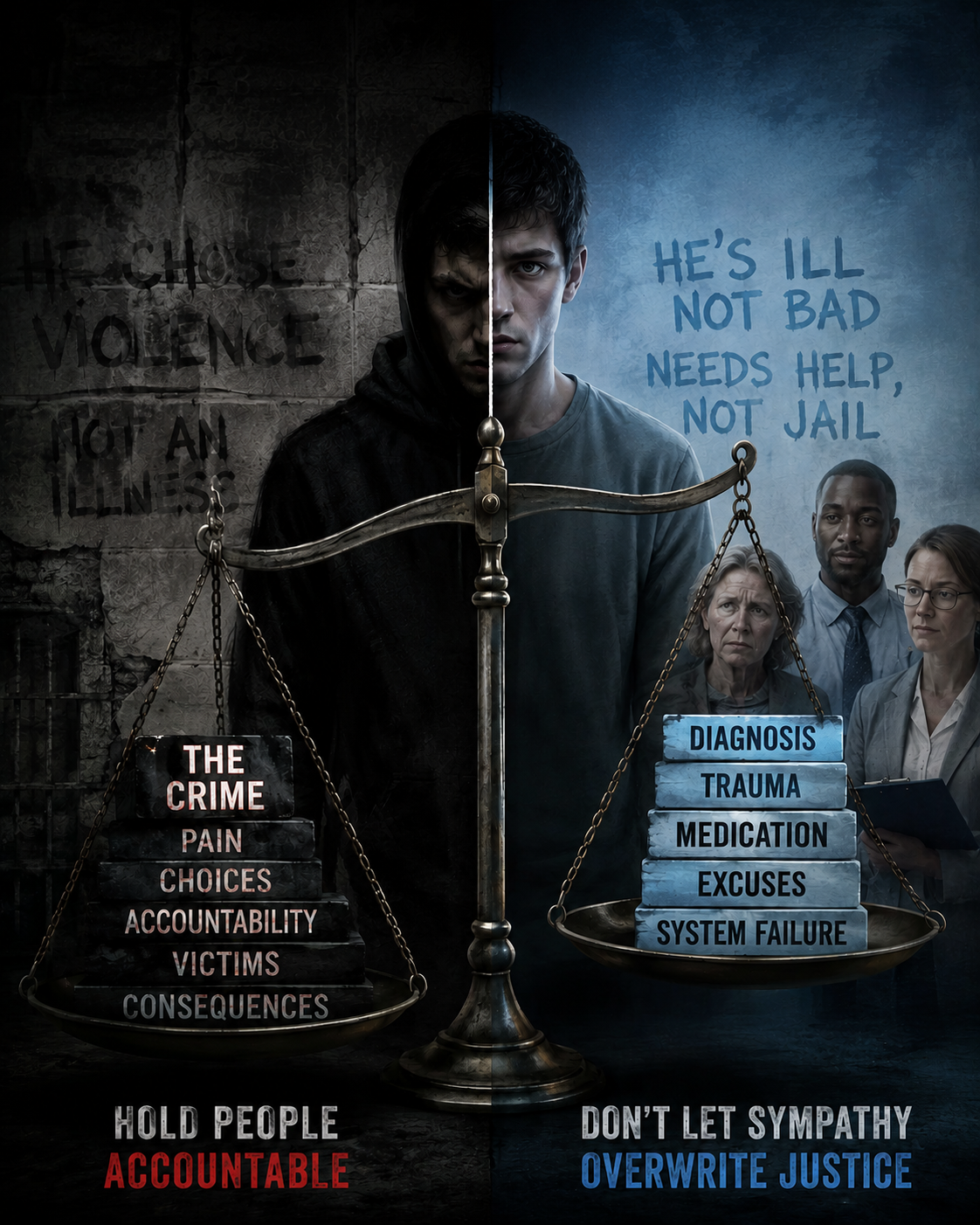
The Lindsay Clancy trial is drawing attention to some important issues in our country. Primarily involving psychiatry, mental illness, and the law. Clancy pleaded not guilty by reason of insanity after admitting to the murder of her three children. She suffered from what psychiatrists call postpartum psychosis. This is a condition that goes beyond the normally understood tenets of postpartum depression. According to an article entitled A Review of Postpartum Psychosis, roughly two out of every one thousand women who give birth may suffer from this condition, whereas thirteen percent experience postpartum depression alone. Furthermore, psychiatrists say that PP itself is likely what they call, an “overt presentation of bipolar disorder after delivery.” The symptoms of PP are often paranoid delusions, confused thinking, and disorganized behavior. Another interesting aspect of this trial is the fact that many women are standing in solidarity with Clancy. They are excusing the murder of three children in the name of bringing awareness to women’s mental health issues. There are questions that need to be considered here. First, what is mental illness? Does it exist at all, or is it an abstract concept that was developed and accepted by society to describe and excuse behaviors that are yet to be fully understood? Two, does mental illness excuse criminal behavior? Many people believe it does as they argue that the mentally ill cannot be held accountable for their actions. Finally, what do we do with people who commit atrocious crimes such as this when they are found not guilty by reason of insanity? The current model suggests that we hospitalize them, coerce them into treatment for their disorder, and then let them go when they are allegedly cured. This article will explore these questions while asking if we, as a society, are taking the right approach to any of these issues.
What is mental illness? This is an emotionally charged question, as millions of people across the country are prescribed powerful, mood-altering drugs to treat a condition they believe themselves to be suffering from. Interestingly, Thomas Szasz points out in Law, Liberty and Psychiatry that most diagnoses of mental health come from people seeking help for symptoms or behaviors they perceive themselves having. They question something they are doing, or the way they are behaving and seek out psychiatric help precisely because the medicating of behaviors has become so normalized. Szasz argues in both Law, Liberty and Psychiatry, and The Myth of Mental Illness, that mental illnesses do not exist in the way that we understand typical diseases. What does that mean? Basically, illnesses, or a state of health for that matter, cannot exist biologically in a mental state. The term mental itself denotes the processes, or state of being of the mind. He compares this to the existence of actual diseases of the brain, which like other biological diseases, can be biologically identified and specifically treated. This isn’t to say that people aren’t suffering from something. Szasz likes to refer to symptoms commonly ascribed to mental disorders as problems of living, as many of these problems can likely be attributed to a traumatic event, or too much stress. The bigger point to consider here is the question of whether treating emotional problems like an identified, biological disease, or with powerful mood-altering drugs, is the right approach.
Many people believe that mental illnesses can be explained by the chemical imbalance theory. This is the common explanation that has been used to describe and explain people’s symptoms, and why they need to take meds. The belief is that the meds will correct the imbalance. According to an article entitled Chemical Imbalance−Dangerous Myth or Harmless White Lie, psychiatrists have known for decades that the chemical imbalance theory doesn’t pan out. In fact, when this was discovered, the psychiatric profession decided it was better to keep this news from the public as it was believed that people would be discouraged from seeking help. The chemical imbalance theory, or neurobiology, was the best explanation they had to describe behaviors they couldn’t understand, so they stuck with it. This is an interesting concept as Szasz writes in Law, Liberty and Psychiatry that as early as the 1960’s psychiatrists traditionally rejected the notion that people’s experiences and traumas could be responsible for their neurotic behavior, and instead, opted to continue searching for neurobiological explanations. Why does any of this matter in the case of Lindsay Clancy? It matters for a couple of reasons. One, postpartum psychosis, as noted earlier, is thought to be an “overt presentation of bi-polar disorder,” which is set of symptoms described as extreme highs and lows in mood and levels of energy. When looking up the symptoms the first thing to take note of is that there is no definite biological marker identifying bi-polar disorder. Two, it matters because, as Psychology Today notes in an article called Depression is not Caused by a Chemical Imbalance, psychiatrists are not completely sure how psychiatric medications work. Furthermore, another article entitled The Epidemic of Mental Health−Why? shows research suggesting that it was the use of psychiatric medications themselves that caused “chemical imbalances” in the brain when there was none to begin with. There were no chemical anomalies in the brains of people suffering from schizophrenia or depression until after the administration of psych meds. Finally, mental health diagnoses are not verified by performing scans on the brain to positively identify the existence of a chemical imbalance. They are largely given based on a description of symptoms alone.
We have all seen the commercials for today’s never ending marketing campaign for mental health medications. Every one of them comes with warnings of suicidal or homicidal thoughts and behavior, worsening symptoms of depression, or in some cases, even tardive dyskinesia. According to Parade Magazine, Lindsay Clancy was prescribed several medications for anxiety, depression and insomnia. These meds included Zoloft, Ativan, Trazadone, Ambien, Prozac, Klonopin and Seroquel. While many women are rallying around Clancy under the claim she wasn’t getting any help, she was definitely being prescribed meds. The question that must be asked here is whether the excessive use of these meds played a role in her behavior. We all know that every time there is a mass shooting, as another example, it is later revealed that the shooter was also on heavy doses of psychiatric medication.
That brings us to the next question. Should the mentally ill be held accountable for their actions the same as anyone else? This is a question that goes down many roads. First of all, Szasz writes in Law, Liberty and Psychiatry that many (not all) mental health diagnoses result from a person being charged with criminal behavior. The term itself was originally concocted to describe what he calls “shorthand expression for certain types of behaviors.” Today, the term is used as an excuse to describe the sole cause of these behaviors. This person committed this crime because he or she is mentally ill. According to Szasz, this is the view of many psychiatrists. People commit crimes because they are sick, and unable to assume responsibility for their actions. Therefore, psychiatric treatment, as opposed to penal punishment, is the answer. Is it though? Think about this a moment. In many cases, people accused of committing atrocious crimes are often given hearings to determine if they are competent enough to stand trial. If it is determined they are not, they are often sent to receive treatment, coercively mind you, for a disorder that has been demonstrated in this article, doesn’t exist the way we have been led to believe. If they are found to be well enough to be released back into society, they go without answering for the crime they committed.
This creates a moral problem. Murder, for example, is wrong. It doesn’t become excusable because someone was taking umpteen psychiatric medications and is deemed to have mental health problems. There is a line being crossed here between sound moral values and issues related to health. Szasz describes it by saying the prioritization of health, or mental health issues in law, becomes the higher moral standard. In other words, health, or issues pertaining to it, are regarded as having higher value than those based on an absolute morality. Like murder being wrong. The door is now open to excuse the act based on the perceptions of people who readily admit that the term mental health “lacks a consistent operational definition that covers all situations.” It was shown earlier that the only real criteria being used to determine mental illness is a description of symptoms and a physical exam. This exam does not include brain scans because there is nothing definite that shows a neurobiological cause for mental illness. We also know that many times, mental health meds are prescribed based on a very subjective survey which asks patients to describe their symptoms on a scale from one to ten. Therefore, the same people who, by the seat of their pants, diagnose mental illness based on their subjective views, are also influencing the decision to either punish a crime, or treat it like a sickness. They also play a role in deciding when a person has been deemed safe enough to re-enter society. Based on what criteria? Someone simply saying their symptoms are gone? If there isn’t a brain scan to detect mental illness, how could there be one to verify it is cured?
This brings us to the last question. What do we do with people who are found not guilty by reason of insanity? The bigger question, however, is whether this type of proceeding should even take place at all. It creates a dilemma of sorts because psychiatrists are all individuals, working off of presuppositions that are very subjective in nature, and not based on any solid facts. Let alone absolute moral foundations. What does this mean? Absent an absolute standard, justice is not the defining criteria. There is no absolute standard from a psychiatrist opining on legal issues. Instead of murder being absolutely wrong, it becomes subject to the interpretations of behavior based on opinions of people who believe that any behavior deviating from the norm, whatever that is, is a sign of mental illness. What is the specific set of circumstances that would prompt one psychologist to suggest an individual is incompetent to stand trial, and another to say someone else is for the same crime? There is no standard, it is all subjective. Lindsay Clancy could very well be found not guilty by reason of insanity, be committed to an institution, and two years later be set free because she successfully completed the treatment program. If a person is found incompetent to stand trial for murder, rape or any other atrocious crime that severely injures another party, they should sit in jail until they are competent. When the trial commences, the standard should be based strictly on the crime, and the morality surrounding the issue. Murder is wrong, and the punishment is life in prison, or even the death penalty.
Many people would argue that liberal judges are way too soft on crime. In many instances, people are sent through the system repeatedly, getting away with violent crimes that should have landed them a life sentence. It is precisely because the psychiatric profession has been operating from the perspective that those committing crimes are doing so because they are sick and in need of treatment. In some cases, capitalism is even blamed. These are subjects that could take up several volumes. The only way true justice can ever be served is if it is based on absolute moral standard and all people are held to it. Sure, maybe dire circumstances deserve a chance to be heard for some more petty natured crimes, and maybe those circumstances may determine the extent of punishment; however, replacing punishment with psychiatric treatment that is just as subjective as the condition allegedly causing the crime, is too much. That does little more than enable people to disregard their responsibility for actions they committed. When we allow grown adults to skirt responsibility, and blame their actions on anything but themselves, we are essentially saying that man himself is incapable of self-government or making decisions in his best interest. That, however, is another article altogether.
Enjoy this content?
Be sure to check out my latest book! The Psychology of Persuasive Propaganda: The Things You Should Know.

Check these out as well.
Without a Shot Indeed: Inducing Compliance to Tyranny Through Conditioning and Persuasion.

and A Critical Look at CRT in Education, Research and Social Policy

Copyright 2026. This is the intellectual property of David Risselada and defenseofournation.com


