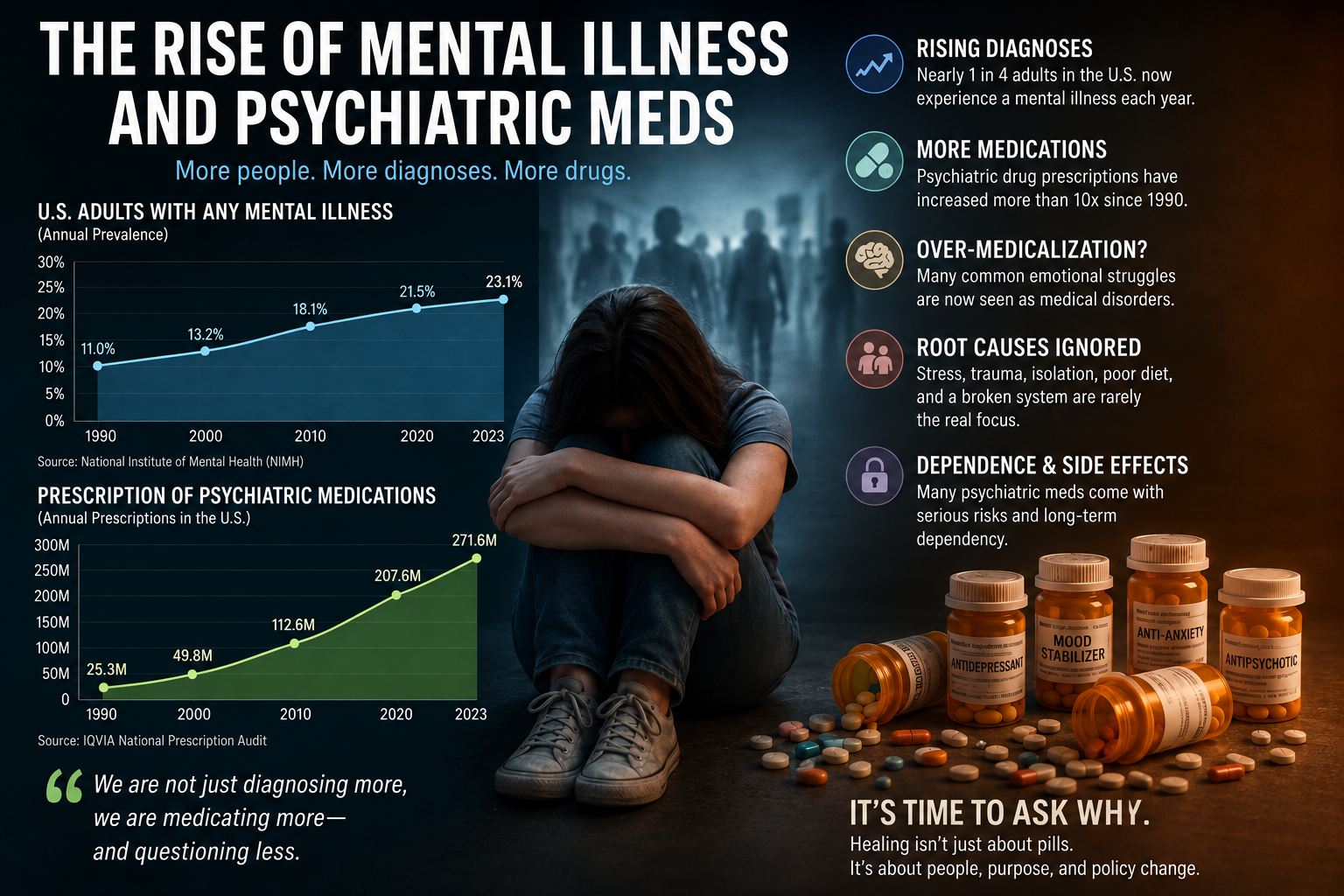
In my last article I discussed Lindsay Clancy, mental health, and the law. The primary question was one that has gripped the nation, as mental health diagnoses seem to be a convenient excuse for crime. Does a plead of insanity render one incapable of assuming responsibility for murder, or any other violent act? This is a very subjective question as the answer varies widely depending upon the circumstances, the crime in question, and the demographic. For example, nearly all mass shooters are allegedly suffering from some sort of mental illness and taking numerous psychiatric medicines. However, there has never been an instance where the public rallies behind the shooter in the name of bringing awareness to mental health issues. While the political right may argue the mental health angle, and the left clamors for gun control, no one on either side would accept a plea of not guilty by reason of insanity for a mass shooter. What is different in the Clancy case? The feminist movement is backing Clancy as a way to show solidarity with her Postpartum Psychosis, which as noted in my last article, is a diagnosis similar to Bi-polar disorder. It is highly likely that the women supporting Clancy would not be doing so absent a mental health diagnosis. Like mass shooters, Clancy was prescribed several psychiatric drugs, which some would argue, contributed to her violent behavior. Interestingly, a book dealing with the Covid-19 psyop asks a fundamental question that we need to consider. The author asks to what extent the routine prescription of antidepressants is meant to treat mental illness, or are they meant to be a means of social control? Is mental illness deliberately “being inculcated” so that the use of mental health meds will be accepted as the solution? While these questions may seem conspiratorial to some, there is evidence which suggests the mental health epidemic is being fueled by the rampant prescribing of psychiatric meds.
According to an article entitled Anatomy of an Epidemic: Psychiatric Drugs and the Astonishing Rise of Mental Illness in America, rates of psychiatric illness skyrocketed in 1955 with the introduction of Chlorpromazine. This drug was seen as a major breakthrough for the psychiatric profession. It was compared to the introduction of penicillin in the sense it was believed mental disorders could be treated with drugs, like biological diseases. Chlorpromazine set the stage for other drugs like Haldol and the anti-depressants we are familiar with today. According to the same article, the number of patient care mental health episodes in 1955 was roughly 1020 per every 100,000 citizens. By the year 2000, that number had increased dramatically to 3800 per 100,000, or 10,700,000 cases. This increase is in direct correlation to the introduction of psych meds into the population. The same thing happened in 1987 with the introduction of Prozac. The number of people considered to be disabled due to mental illness jumped dramatically as did the amount of dollar sales. We have all seen the commercials for these types of drugs. Major side effects include increased anxiety, serotonin syndrome, and suicidal thoughts and/or behaviors. The bigger question remains here. Why are drugs meant to treat symptoms like anxiety or depression, causing more of the same?
As mentioned in my previous article, the theory of a chemical imbalance causing mental illness is a fallacy. Evidence shows that the use of psychotropic drugs is not only the real cause of chemical imbalances but can lead to an increase in pathological behavior as well. According to an article entitled Initiation and Adaptation: A Paradigm for Understanding Psychotropic Drug Action, the neurotransmitter functioning of the brain goes through significant changes with the introduction of psychiatric meds. SSRI’s, anti-depressants, and anti-anxiety meds block the reuptake of serotonin causing massive change in the amount of serotonin production by up to fifty percent or more. This, according to Hyman and Nestler (1996) leads to a brain that is functioning very differently from one not under the influence of these drugs. Furthermore, Whitaker (2005) cites a book called The Invisible Plague, which states any deviation from the normal chemical processes of the brain can cause delusional behavior, irrational thinking and erratic mood swings. Psychiatric meds cause a disruption of normal processes and therefore, are likely to create more symptoms synonymous with mental illness. In many cases, this is often described as treatment resistant depression, where the prescribed medications are seen as ineffective and in response, psychiatrists prescribe additional drugs. We see this in television advertisements where a drug is marketed as a “booster” to an existing med that is not doing what it is supposed to do. It is more likely that the drug itself is creating additional symptoms which are then medicated.
It is becoming a well-accepted idea that the use of psychiatric drugs leads to violent and suicidal behavior. This is despite the profession’s attempts to cover it up. According to an article entitled Precursors to Suicidality and Violence on Antidepressants: A Systematic Review of Trials in Adult Healthy Volunteers, the prevalence of adverse effects that involve violent or suicidal behavior is vastly underreported in the literature. Despite this, the authors were able to determine, through their reviews, that anti-depressants more than doubled the risk of suicide and aggression towards others. According to psychiatrist Peter Breggin (2004) all SSRI drugs like Prozac, Zoloft, Paxil and Celexa can cause manic behavior. In fact, he states that mania is an adverse effect acknowledged by the FDA. Yet, these drugs are prescribed at an alarming rate. In many cases, patients are taking more than one. For example, Breggin points out three cases from the literature where patients taking more than one psychiatric drug reported auditory hallucinations suggesting suicide, paranoia, increased anxiety, and in one case, delusional feelings that television messages were explicitly targeting her. SSRI’s make up the majority of drug induced mania cases. Interestingly, he points out that these three cases were successfully treated with the removal of these drugs.
Another area of concern when it comes to mental illness, psychiatric drugs, and the idea that there is an agenda behind it is the issue of ADHD. Children across America are prescribed powerful stimulants like Ritalin, which is a schedule II narcotic. Ritalin has been known to cause suicidal ideations and heart problems, which have killed many children. ADHD, like other so-called mental illnesses, is not identified by the existence of a biological anomaly that can be seen and physically treated, but by a set of behaviors deemed abnormal. These behaviors are the inability to sit still and pay attention for long periods of time, mostly. Educators hold a tremendous amount of power when it comes to prescribing Ritalin. In many cases, a teacher’s recommendation to a school social worker is all it takes to force a child seen as being too hyper to take these meds. According to an article entitled Medicine Goes to School: Teachers as Sickness Brokers for ADHD, teachers have more influence over the diagnosis of ADHD than any other childhood disorder. The DSM-IV provides diagnostic guidance to teachers through the use of behavioral assessments. Teachers with little to no training in mental health are playing a major role in drugging children with substances that in many cases are affecting them all their lives. According to Peter Breggin (2000) the disease itself was concocted to “rationalize a pre-existing motivation within medicine and psychology to use stimulant drugs to control the behavior of children.”
While this article was hardly all encompassing, we did look at some aspects of the questions posed at the beginning. Are psychiatric medications being used to treat disorders, or are they used as a means of social control? In the previous paragraph we looked at ADHD and how teachers have the power to prescribe powerful meds to children in the name of controlling their behavior. The question of whether mental illness was being purposefully inculcated in society was also asked. We looked at some evidence which suggests that the rise of mental health issues is directly related to the introduction of psychiatric meds. Finally, we also saw evidence connecting suicidal and violent behaviors to the use of anti-depressants. Very little came up on this topic when doing an initial search. This was one of the points. The research that was cited explicitly stated that violent behavior as a result of medicines like Prozac, Zoloft and Paxil is vastly underreported, and as suggested, likely covered up deliberately. These are important issues to consider as millions of Americans are taking anti-depressants and the question of whether people can be held accountable for their actions when in a drug induced state hovers above all of our heads.
Enjoy this content?
Be sure to check out my latest book! The Psychology of Persuasive Propaganda: The Things You Should Know.

Check these out as well.
Without a Shot Indeed: Inducing Compliance to Tyranny Through Conditioning and Persuasion.

and A Critical Look at CRT in Education, Research and Social Policy

Copyright 2026. This is the intellectual property of David Risselada and defenseofournation.com


