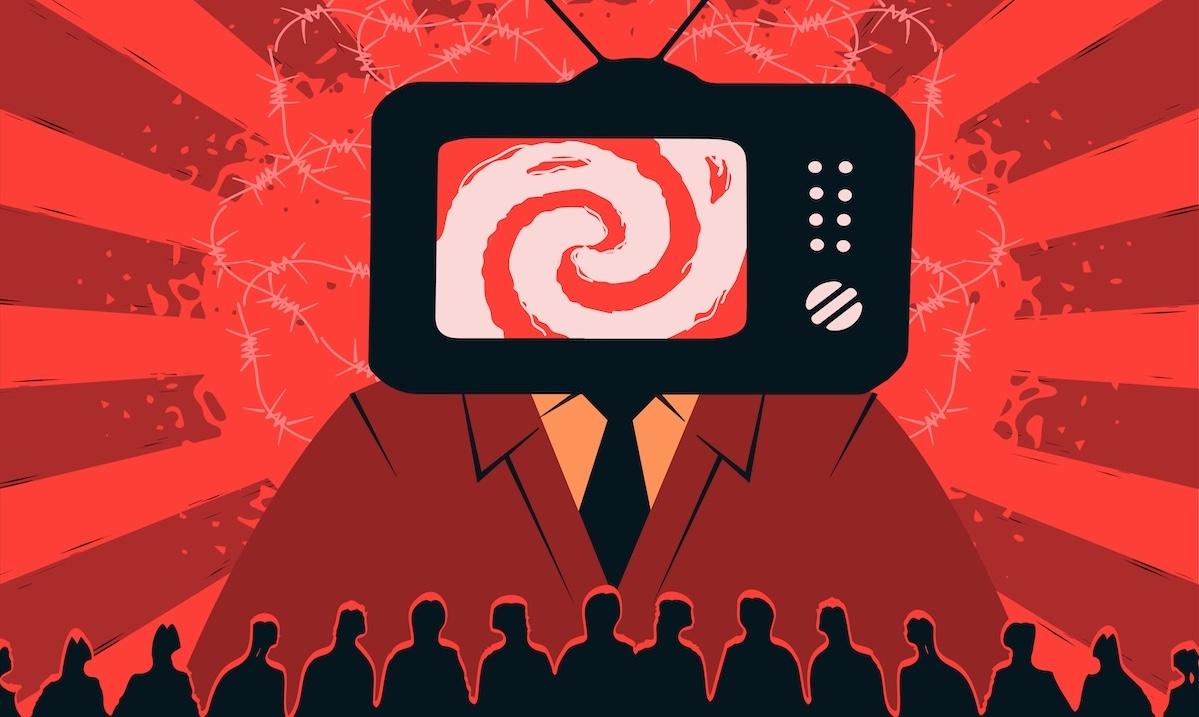
In just a couple of days Americans will be rushing to the polls under a very misguided belief they are punishing the party in power or standing up for their own values. They will either vote for Democrats because they are sick of what Republicans are doing, or they will vote Republican because they are afraid of what Democrats will do. On the surface it seems these two political entities stand opposed to one another on very important issues. For example, the Democrat version for America is a social welfare state where everyone is equal, and the American dream becomes a government guarantee. The Republicans, on the other hand, stand for the equality of opportunity and individual liberty. Unfortunately, what we end up with every time is a rapidly expanding national debt, a devalued dollar, war, policies that put the interests of Americans last, and an ever-increasing loss of personal freedom. Between elections, the news media fills its role by keeping the public sitting on the edge of their seats with scandals, trauma inducing events and stories that keep people attached to their preferred narrative, while actively participating in a system that desperately needs their participation, and one in which the public desperately needs to belong. The government needs an understanding of public sentiment towards these issues so they can develop their propaganda, and the public needs the propaganda, so they feel justified in their positions. Propaganda, after all, always works best when it reflects the attitudes and beliefs of the targeted audience.
“Propaganda is needed in the exercise of power for the simple reason that the masses have come to participate in political affairs.” (Ellul, 1952, p. 121)
Most Americans have no idea they are being propagandized at all. They watch the news, generally believe it from whatever perspective they are watching it from, and go about their lives believing they are staying informed. In my last article I discussed the idea that intellectuals are perhaps the most susceptible to propaganda precisely for this reason. What they don’t realize is it is their participation, and interest in politics, that creates the need for government propaganda to begin with. Why? According to Ellul (p. 123), the government, by the very nature of the public’s interest in their action, are under the control of the public in terms of having to give the appearance of following public opinion, which often collides with government policy. In order to overcome that opinion, government probes the public to find out what it is thinking (Ellul, p. 124). This is what is meant by the phrase used earlier, propaganda works best when it reflects the attitudes and beliefs of the targeted audience. Once the attitudes are understood, government can go about the business of shaping and guiding that opinion (Ellul, p. 126) so the demands of the public are in line with actions the government has already decided on. Propaganda, according to Ellul (p.127) serves the great purpose of creating the illusion that the public has an active, participatory role in what the government is doing, that they wanted it, and are responsible for any successes that may follow.
This is why people cling to their parties so tightly. They are being fed a narrative which reflects their beliefs. The Democrats, for example, target their audiences with messages of equality, ending capitalism, and gun control. These policy initiatives are all driven by one common theme. Compassion for others. They want to enact socialist policies, and because they have successfully equated socialism with compassion, they have socially engineered a public opinion which actively begs for the policies they want to impose. The more the government can give the appearance they are following opinion, and not creating it, the more support they will get from the very public they are manipulating. Look at the Trump administration. For years his biggest supporters were following the Q narrative, which did little more than tell them what they wanted to hear. Their concern for the future of the country after eight years of Obama, and four of Biden, were easily taken advantage as “Q” fed them a narrative of a grand plan to save the country from the Democrats. While the administration itself was incrementally pushing the country further left, no less. This was highly effective as this narrative captured the desires of the political right to not only uphold the values of their country, but stick it to the left and their radical, anti-American agenda.
“Government propaganda suggests that public opinion demand this or that decision; it provokes the will of the people, who spontaneously would say nothing. But, once evoked, formed and crystallized on a point, that will become the people’s will; and whereas the government really acts on its own, it gives the impression of obeying public opinion—after first having built that public opinion.” (Ellul, 1952, p. 132)
Just as we discussed the need for government to use propaganda, we must also discuss the need of the public to be propagandized. This first starts with a need for belonging and approval. People need to feel as if they are part of something bigger than themselves, and this can be used as a form of social control. People, according to B.F. Skinner (1971, p. 91) who get along under the “mild contingencies of approval and disapproval” are controlled better than when living under a full-blown police state. Propaganda, particularly that of a political nature, reaches into men’s need to belong by making them feel as if their contribution matters, (Ellul, p. 148) and that they are part of a larger whole, pushing for something worthwhile. For most people, this fills a void of working a dead-end job, and a society which is rapidly drifting further away from any real, upward mobility. People desperately want to be told there are solutions to the problems we face, and they want to be active participants in solving those problems. It doesn’t matter which political party is in power, the support for that power often rests on the disillusioned hopes of correcting course. Democrats, for example, will be rushing to polls to vote Trump out because of their perceptions that he is a fascist. That driving motivation prevents them from seeing that Trump isn’t all that different from Obama, who wasn’t all that different from Bush by the way, when it comes to dropping bombs and increasing the debt. The same agenda drives on no matter who is in power.
Again, this is something that cannot be stated enough. Propaganda needs to reflect popular sentiment among the targeted audience. It has to have an anchor of resonance that moves a person towards the desired outcome. Ellul (p.150) states that propaganda can create feelings of collective action, justice, independence and even wrath. It must appeal to an individual’s desire to feel involved, important and ready to act in the interests of the propagandizer. It must create the feeling that all will be lost if you don’t participate, if you don’t get out and vote (Ellul, p. 150). Isn’t that something we see every election cycle? It is always the most important election of our lifetime that everything depends on. Both Republicans and Democrats are driven by a sense of wanting to get back at the other party. Their desire for revenge, their seething anger and their beliefs in fabricated narratives have been tapped into, and they are voting for no other reason than to prevent the people they hate from obtaining power, and to achieve a sense of self-satisfaction. Propaganda creates the perception that their opinions and personal sense of justice is being imposed on those who mock those values and beliefs. Think about how Trump’s brilliant attacks against the “looney left” resulted in an almost unquestionable support for everything he did. The more they opposed him, the more his supporters loved him, because their sense of justice was being fulfilled after a relentless assault on American values during the Obama administration. This brings us back to the government’s need to use propaganda. Both political parties need our participation to keep this illusion of choice going. The Democrats need the Republicans to oppose them so that they have a narrative to develop. The Republicans depend on Democrats, so that they can scare their voters, and the system itself is dependent upon that fear. In the end, it doesn’t matter who gets the most votes because it is the system that wins. Voting equals consent in the dark minds of those who thirst for power.
Enjoy this content?
Be sure to check out my latest book! The Psychology of Persuasive Propaganda: The Things You Should Know.

Check these out as well.
Without a Shot Indeed: Inducing Compliance to Tyranny Through Conditioning and Persuasion.

and A Critical Look at CRT in Education, Research and Social Policy

Copyright 2026. This is the intellectual property of David Risselada and defenseofournation.com


