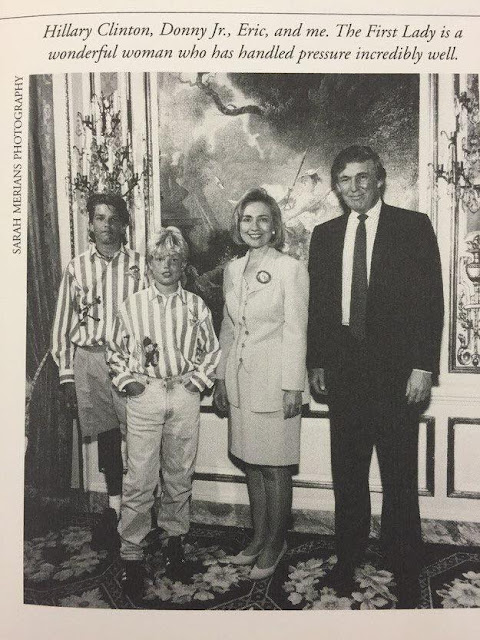
I have to admit that Trump’s behavior has expanded beyond what I expected from him. As most of my readers know, I have been quite skeptical of the president, always alluding to the fact that he has had a long, and well documented by the way, friendship with Bill and Hillary Clinton. Never in my wildest dreams, however, would I have suspected that he would openly mock Jesus Christ the way he just has, or even be implicated in the Epstein mess. I have, however, always argued that he was put in place to persuade the conservative voter into acquiescence with the globalist agenda. In some ways, this has become indisputable for anyone being honest, as conservative voters have by and large, accepted many things from Trump that they wouldn’t from Biden, or Obama, that seem to push conservative attitudes unknowingly to the left. It is on one hand humorous, and on the other, tragic, as over the years I have been viciously attacked as a milk toast patriot for offering up what I considered to be thoughtful, and well written criticisms of Trump’s so-called, conservative positions. While many people seem to be awakening to the idea that they have been bamboozled, while having fun mocking Trump in the process, we are left with a daunting reality. As a movement we have done nothing to build a viable conservative opponent that stands a chance of beating a Gavin Newsome type candidate, or worse yet, Alexandria Ocasio Cortez, Kamala Harris, or even Michelle Obama. Instead, conservatives were led down this dangerous idea of possibly accepting a third term from Trump under the “only he can save us” narrative that has trapped the minds of so many people. In any case, we are now facing the prospects of a leftist landslide in the midterms, and no conservative candidate that has a chance of winning in 2028. On that point, I digress. Many people have scoffed at me for pointing out the reality of Trump and Clinton being friends. However, it is something that should have never been ignored as Hillary herself, is a disciple of none other than the king of community organizing author of Rules for Radicals, Saul Alinsky.
What are the implications of that and why does it matter? Hillary Clinton knew Alinsky personally, and wrote her college thesis, “There is only the Fight,” based on his confrontational organizing style. The title of the paper itself speaks a great deal towards the ideas Alinsky represented as it implies there is nothing more important than the social change sought by Alinsky, and the radical left. Where Alinsky and Clinton differed were their beliefs whether this type of change could be achieved outside the system. Clinton, rejecting a job offer from Alinsky, believed that change could only happen by working within the government. A “cast aside my radical appearance and don a suit and tie approach,” if you will. Alinsky’s primary objective is the accumulation of power, and the ethics and morals, or lack thereof, involved. He believed that the organization of the lower strata of society was key in achieving the type of political power needed to gain true social equality among the masses, and any means were permissible towards those ends.
In her paper, Clinton primarily draws from Alinsky’s book, Revile for Radicals, as his better-known book, Rules for Radicals had not been published at the time. She writes that Alinsky operates from a position of moral relativism, meaning he holds no absolutist stance on any traditional morality. According to Clinton, Alinsky, like so many others on the left, believe that a whole new world, commonly referred to as a utopia, will eventually be brought about by the inherent goodness of man. This highlights a stark difference between the left- and right-wing worldviews. People on the right, believing in God and the sinful nature of man, believe that an absolute morality exists that governs his conduct. Moral relativism, on the other hand, is a philosophical view that argues morality can change based on the customs and beliefs of various cultures. In other words, simple concepts like right and wrong are not rooted in stone but based on cultural perspectives.
While Clinton makes Alinsky seem like a saint, as he is primarily driven by the empowerment of the less fortunate, it is his moral relativist positions and methodologies that are concerning. In Rules for Radicals, he mocks traditional morality by using the term means and ends moralists. We have all heard the phrase “the ends justify the means,” however, many of us would never imagine the depths of what defines means and ends morality from a relativist position. Alinsky refers to people held back by their moral convictions as moral non-doers. From a certain perspective, there is something to this. For example, he mentions the failure of German society to take any meaningful action against the Nazi’s, as they knew full well what was happening in their country. They would have been right, even from a moral absolutist position, to stand up and fight the Nazi regime.
Where Alinsky’s ideas become problematic is his mockery of traditional morality. For instance, he says that “to believe that corrupted means will corrupt the ends is to believe in the immaculate conception of ends and principles.” What does that mean? He is saying that pursuing an objective using corrupt means doesn’t equate to corrupted results. What should grab your attention are the words immaculate conception. That term is used to describe the conception of the Virgin Mary, and how God kept her free from original sin for the specific purpose of being Jesus’ mother. What Alinsky is really doing, then, is mocking religion while also comparing principles rooted in religious morality to what he sees as supernatural and unrealistic. He uses the words mystical objectivity to describe the belief that men’s conduct could be governed by such morality, completely free from corruption.
To radicals like Alinsky, the fight for this new world is all that matters, and any conduct that pushes toward that end is the higher form of morality. This includes corrupting yourself in the pursuit of this world, as he says; “in action, one does not always have the luxury of a decision that is consistent with one’s individual conscience and the good of mankind. The choice must always be for the latter.” What he is saying is that the greater good, a term we often hear from the left pertaining to so many social issues, must always come before one’s personal morality. This, of course, brings up the question of who defines the greater good. Those two words will certainly hold different meanings depending on which side of the aisle one is sitting. Alinsky goes on to suggest that people unwilling to corrupt themselves for this greater good, don’t care about people at all. “He who sacrifices the mass good for his personal conscience,” he writes, “has a peculiar conception of personal salvation; he doesn’t care enough for the people to be corrupted for them.” That one statement alone suggests that the willingness to engage in corrupt behavior, in the push for social change, represents the highest level of morality. He is, in other words, mocking Christian ethics.
The title of Clinton’s paper, as mentioned earlier, sums this up well. All that matters is the fight for this new world, and any means of achieving it are fair game. To what lengths are they willing to go? A few years back I wrote an article similar to this one in tone and content, while also discussing Q. I asked if it was possible that Trump was merely posing as a conservative. I highlighted his friendship with Clinton while suggesting he could be working to deliberately undermine conservative values, while persuading his voters to accept things they would normally oppose. That, by the way, is Edward Bernays’ very definition of the word propaganda. One example I used was Trump’s push for Red Flag Laws after the Parkland Florida school shooting. Most of Trump’s voters, and this has held true for much of this current term as well, believe he is a die-hard Second Amendment supporter.
Many people are now awakening, however, to the idea that Trump is currently pushing an agenda that they did not vote for. The war in Iran is but one example. As it stands at the time of this writing, Trump is demanding Congress re-authorize warrantless spying against Americans in the latest FISA bill. This is something that he explicitly spoke against two years ago. Many commentators are presenting this as a complete flip-flop on his positions. He is also trying to persuade Justices’ Alito and Thomas, two of the court’s most ardent defenders of gun rights, to retire. Many people, no doubt in an effort to reduce their feelings of dissonance, cling to the idea that Trump has somehow been compromised by the very swamp he is supposed to be draining. That doesn’t make sense because it contradicts the four-dimensional chess narrative. If he was such a brilliant strategist, he wouldn’t be compromised. This leaves the possibility that he was never who people thought he was in the first place. This leaves the possibility that he is working hand in hand with people to deceive his voters, while pushing the same, global government, mass surveillance state agenda. Which, if we are being honest, we know he is doing. Is it possible that the entire Trump vs. the deep state narrative, or better yet, the Trump vs. Clinton debate, was nothing but a charade to cement the preexisting belief in the minds of many voters that Trump was our only hope? If you have been following my writing, and studying the material I cite, you know it is more than a possibility. It is probable.
There are even bigger implications to this than people may realize, that go beyond Trump. If the Democrats should win in 2028, which it is likely they will, they surely will bring the country even further away from the traditional values held by many people. Which means, voters will once again be desperate for change, and willing to accept anyone who promises to bring it. We are where we are because people who are not guided by any moral principle operate from the premise that corrupted means do not corrupt the ends, and they have been in charge for too long. We have to stop putting so much faith in the politicians we elect and spend more time holding them accountable when they are not governing by our constitutional principles.
“Any revolutionary change
must be preceded by a passive, affirmative, non-challenging attitude
toward change among the mass of our people. They must feel so
frustrated, so defeated, so lost, so futureless in the prevailing system that
they are willing to let go of the past and chance the future. This
acceptance is the reformation essential to any revolution. (Alinsky, Rules for Radicals)
If you enjoyed this article, be sure to be looking out for my latest book, The Psychology of Persuasive Propaganda: The Things You Should Know. In the meantime, you can check out –
Without a Shot Indeed: Inducing Compliance to Tyranny Through Conditioning and Persuasion.

and A Critical Look at CRT in Education, Research and Social Policy


